Showing posts with label Research. Show all posts

Monday, 5 September 2011

Target Audience Questionnaire

One of the most helpful things in production is market research. To give me some guidance on some decisions for my music video, I conducted an Audience Questionnaire on Survey Monkey and helped me to focus on who was my Target Audience and what their thoughts were on different aspects of music videos.

Question 1: What gender are you?
This question was designed to see what slant the focus group had, even though the selection process was not completely random, so that the decisions made at the design stage were more in line with that gender's interests. The final result was that 60% of the group were male while only 40% were female. From this I now know that I need to keep my video relatively gender neutral, although, there will need to be some elements in the video that are more desired by men.
Question 2: Which of these consumer types is the most like you?
This question is based upon Young and Rubican's Four Consumers and it is a way of honing who exactly is my target audience. The results show that 85% of the focus group were either Mainstreamers or Reformers. This means that I will have to attempt to cater for two completely different audiences in the same video, although, in being unique, this may be completely possible.

Question 3: Which Value, Attitude and Lifestyle group suits you most?
This question is used for exactly the same purposes as Question 2.  The final results show that the majority of the focus group were either Fulfilleds or Strivers, meaning that they are either mature, comfortable and reflective, valuing knowledge, order and responsibility and basing their decisions on principles or they desire approval from those around them, trying to emulate those who have more and wish for what is usually out of reach and are impulsive and unsure of themselves. Once again, the two most popular groups are vastly different, but, the message that the song I am using will allow me to create a video that caters to both.

Question 4: Which group do you feel suits you best in the LifeMatrix?
The final question about audience is based on the LifeMatrix. My initial thoughts were for my Target Audience to be a mix of Tribe Wireds and Fun/Atics and the focus group fit this projection particularly well with 60% of them fitting into one of the two categories. This means that my video will have to appeal to the digital, free-spirited and creative as well as the aspirational, fun-seeking and active youth, meaning that my video will have to have a decent pace and some fun and creative elements within it.

Question 5: What aspects of music videos do you find to be the most important?
This question started a string of questions about music videos and it was the key question in my focus on music videos. The three highest scoring aspects of videos were Uniqueness, a Narrative Element and a Performance Element with the Narrative having a 5% lead on Performance meaning that there should be a slightly greater pull on the narrative aspect of the video. Surprisingly, the focus group wanted there to be an equal focus upon the Singers and the Instruments during the Performance elements and this is something that I will have to address in the final music video. The least important aspect was an interesting location. This could suggest that as long as the other elements are excellent, the location does not matter as much.

Question 6: What are some of your favourite music videos and why?
Include a YouTube link if possible.
One of the things I wanted to discover most was whether I had been looking at the right videos for my music video and to see whether my focus group believed there were other videos that better as well as what they found to be the most enjoyable parts of videos. Most of the words used to describe their reasons were like "original" or "fitting" or "unique" and these are all reasons that I want to apply to my own video. Some interesting and helpful responses included:
"Dirty Little Secret" by The All-American Rejects

“The video is just fitting and I like how they have lots of people exposing secrets. Quite a simple video also.”
"Giving Up the Gun" by Vampire Weekend
"Because I like the originality of the video."
"The Ballad of Mona Lisa" by Panic! At The Disco
“Panic! At The Disco's is a personal favourite of mine, telling a story that has a deeper meaning than appears.”

"You and I" by Lady Gaga
"Because it makes no sense, and I love watching it over and over to try and understand it."
Question 7: What sort of costume and props would you expect to see in a Rock music video?

While I knew my own expectations of Rock music videos, I wanted to see if my focus group agreed with those. The results are pretty much as expected. Costume should be jeans and a t-shirt, usually darkish colours and the props should be just the instruments. This means that this is what my own music video should use even if it requires little costume and prop planning. Responses to the question included:
  • “A Rock music can contain anything it wants, there are no limits. All in all, it depends on the style of the individual band members. To generalise, you're looking at jeans, maybe skinny. Many wear black, or dark colours, Band T-shirts are also popular.”
  • “Guitars, drums, vocalist, usually dark and blackish outfits”
  • “Trendy clothing and props wise I would expect guitars, drums ect.”
  • “Depends on the type of rock. The lighter stuff band mechendise t shirts and both bright and dark contrasting colours. However in heavier rock generally black and dark colours and ominous styled props.”
  • “Skinny Jeans, Flashy things, Good Hair”
Question 8: Do you prefer literal music videos or slightly more abstract music videos and why?
The final question was to see whether I needed to change my slightly abstract idea for my music video to match the needs of my target audience. Thankfully, the majority of the group preferred Abstract videos, with fourteen out of the twenty choosing that as their option for a variety of reasons including:
  • "Sometimes it fits and sometimes the lyrics may not be the best and you may prefer the guitar solos or something, so sometimes it's better to have something abstract.”
  • “It makes you question the video more and therefore engages the audience”
  • “As they are not following the lyrics of the song but on what the song sound like.”
  • “They are different to others and make you think more about the song and meanings etc.”
  • “As they usually are more creative, unique and not generic.”
  • “Normally more abstract videos that are still relevant to the song, otherwise they come across as incongruent (for example, Bon Jovi's 'Always') or pretentious.”
  • “Abstract, it gives the viewer to interpret the video and relate it to him or her self. making a stronger connection to the song and the video. it makes you think about your life and its as if these people understand what you are going through”
However, there were some who thought otherwise. Only one person preferred literal videos, based upon an ideal of authenticity, and two suggested that both types of video were good if they were 'pulled off correctly' or 'linked back to the song'.

Overall, my questionnaire has helped me define my Target Audience has Mainstreamers and Reformers who are either Fulfilleds or Strivers that fit into the Tribe Wired/Fun/Atics LifeMatrix system. It has also pointed out what my video needs to focus upon as well as confirming costumes and props and proving the reasons why people enjoy music videos.

Saturday, 27 August 2011

Friday, 26 August 2011

Friday, 19 August 2011

Music Video Directors

Name: Alan Ferguson
Signed to: Yvette Lang-Einczig & Yell Productions

Over the years has worked with a variety of artists including Panic at the Disco, Katy Perry, Natasha Bedingfield, Gym Class Heroes and Jay-Z and has frequently worked on music videos with the band Fall Out Boy.

The Zebra in Katy Perry's "Hot n Cold" music video
One of the major elements of Ferguson’s work that impresses me is his ingenious use of imagery and intertextuality. In videos like Katy Perry’s “Hot’N’Cold” there are some very interesting images like the Zebra to highlight the line “It’s black then it’s white” in an obscure and memorable fashion. The image appears at the end of the video to show that that the entire video is a dream.


It is Ferguson’s work on the Fall Out Boy music videos that impresses me the most. “Dance, Dance” is one of the bands most famous songs and the video makes appearances in other videos including “This Ain’t a Scene, It’s an Arms Race” which is a continuation of the plot from “Dance, Dance” and “I’m Like a Lawyer with the Way I’m Always Trying to Get You Off (Me & You)” where the video appears being watched by a group of Ugandans. Also, in the video “What A Catch, Donnie”, multiple props from other videos appear most likely due to a series of lyrics from other songs appearing in the song’s climax. While this intertexutality is clearly due to Ferguson working on so many of Fall Out Boy’s videos, it does knit the band’s videos together brilliantly in a manner that most artist’s videos never do.

Name: Dave Meyers
Bio: Born in Berkeley, California.
Worked at a local Landmark cinema at 17 where he gained his love of film before attending Loyola Marymount University where he majored in Film Production and Philosophy. In 1997 he started working on music videos and has since directed over 200 videos from a plethora of incredibly famous artists like Jay Z, Britney Spears and Aerosmith.
His goal is to "innovate the field while supporting artists in their journeys to define themselves." [Source]

The major thing that impresses me about Meyers' work is that he is totally dedicated to making his videos fit into the artist's definition to define themselves. This is something that I would like to do in my music video. Meyers also makes excellent use of imagery in his videos, usually leading to some of the most memorable music videos ever.


The spectacular CGI fireworks in Katy Perry's "Firework" video really add to the poignancy of the song. They add an amazing sense of colour and motion to the video in a way that has never been done before, linking in with Meyers desire to "innovate the field".

Pink's "Funhouse" is also an incredibly interesting video due to the juxtaposition of Pink in white having fun whilst the location is a burnt out wreck of a house. The over the top nature of the video and Pink's attitude is one that Meyers has clearly developed with Pink over the years through their work on numerous other videos including "You Make Me Sick" and "So What". While I would never be able to go to such extremes in my music video, it would be excellent if I could capture the true essence of the artists in the music video like Meyers does so well with Pink.

Tuesday, 16 August 2011

Interesting Videos


Elbow’s “Grounds For Divorce” is an interesting video because of its location and its use of reversing shots. The location of a pub like this is one of the potential locations for my music video as it fits the band’s low key rock theme. The reverse shots are a bizarre occurrence in music videos and it makes the video stand out against many others which might have used a similar location or theme. It is this uniqueness that I want to emulate in my video. As long as there is something that separates it from the norm, my music video should be great.


Adele’s “Rolling in the Deep” is really interesting for similar reasons. The location, an abandoned and slightly dilapidated house, is one that I believe would theoretically work well in my music video as it fits the theme of the song. Also, the figure dancing in the dust with the sword, the smashing plates and the burning card city are all very interesting images that make the video unique.


Green Day's "American Idiot" has a very iconic video which is remembered largely for its climax. The Foo Fighters "The Pretender" uses a very similar climax and the idea of a memorable climax is something that I will have to attempt to create for my music video as it would ensure repeated viewing.

Friday, 12 August 2011

Wednesday, 10 August 2011

Research into the Industry - Genre

A genre is “a class or category of artistic endeavour having a particular form, content, technique, or the like” [Source]

The Theoretical Axiomatic Triangle of Genres
Music has many genres all of which are simultaneously different and similar. According to musicologist Phillip Tagg, music can be classified by an "axiomatic triangle consisting of 'folk', 'art' and 'popular' musics." [Source]

Art Music

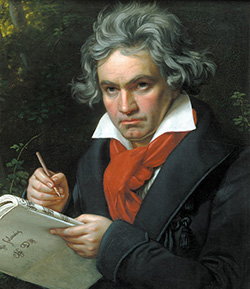
Beethoven's music is a perfect example of Art music
“Art music is music that is used as in a form of a work of art, and uses many textbook elements of music. Art music is generally instrumental, and when vocals are present they have very explicit poetic, political, or religious overtones.” [Source]

Popular Music
Justin Bieber's music is an example of Popular Music
"Popular music, unlike art music, is (1) conceived for mass distribution to large and often socioculturally heterogeneous groups of listeners, (2) stored and distributed in non-written form, (3) only possible in an industrial monetary economy where it becomes a commodity and (4) in capitalist societies, subject to the laws of 'free' enterprise, according to which it should ideally sell as much as possible of as little as possible to as many as possible" [Source]
Traditional Music
'Sakura Sakura' is a traditional Japanese song

“Traditional music is the term increasingly used (e.g. by the Grammy Awards) for folk music that is not contemporary folk music.” [Source]

Criticisms of the Triangle
However, this triangle has been criticised for being too broad in its classification as many songs fit into multiple parts of the triangle.

“Neat divisions between 'folk' and 'popular', and 'popular' and 'art', are impossible to find ... arbitrary criteria [are used] to define the complement of 'popular'. 'Art' music, for example, is generally regarded as by nature complex, difficult, demanding; 'popular' music then has to be defined as 'simple', 'accessible', 'facile'. But many pieces commonly thought of as 'art' (Handel's 'Hallelujah Chorus', many Schubert songs, many Verdi arias) have qualities of simplicity; conversely, it is by no means obvious that the Sex Pistols' records were 'accessible', Frank Zappa's work 'simple', or Billie Holiday's 'facile'." (Middleton, 1990)

Standard Music Genres
Most people will use the more popular way of music classification which looks at the song’s styling. These types of genre include: Blues, Classical, Country, Dance, Hip-Hop, Jazz, Pop, R&B and Rock as well as many other lesser known genres like J-Pop (Japanese Pop), Latino, Christian & Gospel and Comedy. [Source]
Pop Music
Michael Jackson, world renowned King of Pop known for the likes of Thriller, Man In The Mirror and more
 “The definition of pop music is purposefully flexible as the music that is identified as pop is constantly changing.”

"The basic form for pop music is the song and usually a song consisting of verse and repeated chorus. Most often the songs are between 2 1/2 minutes and 5 1/2 minutes in length. ... They are played on the standard electric guitar, bass and drums with vocals that have a very strong catchy chorus, or hook. Art is not a concern. Audience pleasure in listening to the song is the primary goal."  [Source]
Rock Music
World famous rock band, Bon Jovi have produced some memorable anthems like Livin' On A Prayer and It's My Life
"Rock music is a genre of popular music that developed during and after the 1960s, particularly in the United Kingdom and the United States. It has its roots in 1940s and 1950s rock and roll, itself heavily influenced by rhythm and blues and country music. Rock music also drew strongly on a number of other genres.

Musically, rock has centred on the electric guitar, usually as part of a rock group with bass guitar and drums. Typically, rock is song-based music with a 4/4 beat utilizing a verse-chorus form, but the genre has become extremely diverse and common musical characteristics are difficult to define. Like pop music, lyrics often stress romantic love but also address a wide variety of other themes that are frequently social or political in emphasis. Rock places a higher degree of emphasis on musicianship, live performance, and an ideology of authenticity than pop music." [Source]

The band I am using, Modern Winter fits into the Rock Genre because of their emphasis on performance and authenticity as well as the verse-chorus form and standard rock instruments.

Tuesday, 9 August 2011

Research Into The Industry - Artists and Record Labels

The band that I am planning on using is one that is local to the Nottingham area. They all attend the same college as me, they have already recorded at least one original song and I am good friends with one of the band members. These factors made them perfect candidates for my music video.


The band is called ‘Modern Winter’ and is made up of four members, Stephen Jenkins as the lead vocalist and piano, Stephanie Campbell on bass, Tomas Walker on guitar and Matthew Jenkins on drums. The band has been together for six years, but has only had this line up for about three years.

The music industry in the 21st century is largely focused on Record Companies who usually own all of the rights to the music of the artists. These companies pay for the “recording costs and the cost of promoting and marketing the record.” [Source] As such, all artists need to find a label that are willing to take them on.

Modern Winter mainly focuses on the rock genre and as such would most likely get picked up by a record label which focuses around that niche.

However, the band is too low key to get picked up by the ‘Big Four’:

The Universal Music Group (which accounted for 25.5% of the market in 2005 [Source] )
Sony BMG Music Entertainment (21.5% of the market in 2005 [Source])


EMI (13.4% of the market in 2005[Source])
 And the Warner Music Group (11.3% of the market in 2005 [Source] ).
 These are the companies that deal with global headline acts like Adele, Foo Fighters, Lady Gaga, Cee Lo Green etc. mainly through their subsidiaries.


However, seeing as these ‘Big Four’ control so much of the market, it is inevitable that Modern Winter would get picked up by a subsidiary if they were deemed good enough. One record label that could potentially pick the band up is Fiction Records, who are owned by Polydor which is a subsidiary of UMG.

The label focuses mainly on the rock genre and has artists like Snow Patrol, Elbow, White Lies and Athlete and as such would be a decent fit for Modern Winter.


There are perhaps more likely options, with the independent labels like Aardvark Records who are “one of the rising stars of the UK music industry”. They “are a staunchly independent record label with a growing roster of original, new talent covering a variety of music genres.” [Source] Being a UK independent label, this label would be more likely to sign up a band like Modern Winter as they like original and new talent, something which Modern Winter could provide.

Thursday, 21 July 2011

Foo Fighters "The Pretender" Textual Analysis


Camerawork


This particular music video has a very dynamic but abrupt camera. This easily adds an incredible pace to the video and by having the camera move to the beat of the track; it creates a rebellious tone within the video through the fury of the pacing. The unusual abruptness also adds to this rebellious tone. This anti-authoritarian styling is most likely an attempt to attract that subculture to the band like Dick Hebdige theorises.


There are also lots of close ups of the band, although the close ups mainly focus upon lead singer, Dave Grohl. This is typical of music videos as it promotes the 'star image' that Richard Dyer so fervently believes in. However, the close-ness of the close ups makes the shouting singing seem more stand-offish and this is exacerbated by the mise-en-scene and the tracking long shots.

Editing
This music video also makes use of the 'fast cut montage' which renders "many of the images impossible to grasp on first viewing thus ensuring multiple [viewings]" (Pete Fraser, Teaching Music Video (BFI, 2004)). The fast cutting is perfect for the tempo of the song and quickens the pace of the video dramatically. Very few of the shots last longer than three seconds, with most being shorter than one second and this is what gives the video its sense of speed.

The cuts are also edited to the beat, and this, along with the speed of the video, amplifies the anti-authoritarian and rebellious tone of the video.
Mise-en-scene

The Mise-en-scene in this video is incredibly interesting. The entire video takes place within an abandoned aeroplane hangar with a large black line separating the band from the rest of the hangar and a large red wall behind them. The line and the hangar provide a sense of isolation which is exacerbated when the mass of riot officers appear at the line. This creates a confrontational feel to the video and the riot officers in particular suggest the rebellious feelings against the government.

The red wall has connotations of danger and also acts like a matador's cape in the bull ring for the riot officers. By having it explode and flood the hangar with red water it symbolises the fight against the government whilst also providing a thrilling and memorable climax to the video which would most certainly ensure multiple viewings.

Ellie Goulding's "Your Song" Textual Analysis


Camerawork
As with most music videos, "Your Song" has lots of close-up shots of Ellie Goulding lip-synching. The major close up shots create an intimacy with the artist which is furthered by the intimate nature of the song.
                
These close ups also "[emphasise] half of the commodity on sale (not just the song, but the artist, and particularly the voice)" as Pete Fraser states in his book "Teaching Music Video". (BFI, 2004)

The static close-ups are only one part of the video. The other part is made up of various shots of Ellie Goulding having fun with friends. All of the shots include her and they fit into her "sweet girl" image which has been "constructed from a range of materials" (Richard Dyer, 1979) and culminates in this video.

The handheld camera shots have been used to look like the videos are home-made or amateurish to make Ellie feel more real and attainable than the more cinematic videos of Katy Perry and Lady Gaga. They also amplify the song's message and including the audience. The home-made styling makes the audience feel as if they filmed those shots and it really makes it seem like Ellie Goulding is singing the song to them and not to someone else.

Editing
Despite being a slow paced acoustic song, the music video contains many shots that are little more than a second long and with the longest shot barely reaching five seconds in length. This fits in with Steve Archer's thoughts on the technical aspects of music video in his "How to Study Music Videos" article (Media Magazine, February 2004)by having a certain speed to the editing with fast cutting and montage editing which "creates a visually decentred experience necessary for music video consumption." The speed of the editing could also represent how fast life flows by; after all, the lyrics do talk about "how wonderful life is, now you're in the world."

The video also cuts directly to the beat and this is something else that Steve Archer believes to be an "essential part of music video". By doing this, the video has a wonderful flow which never feels jarring and this also adds to the image of life that the fast-cut editing produces.

Mise-en-scene
One of the most obvious features of the video is the bright light on Ellie Goulding's face during the close ups.

This particular effect of the lighting makes her seem angelic and really adds to her 'star image' of the 'sweet girl' which is furthered by her sensible clothing. She seems both realistic and out of most peoples' league through the juxtaposition of the bright angelic light and her very normal costume.

The light also casts a romantic glow which really amplifies the intimacy of the song and depicts
the authenticity within the song which is exactly what music video directors strive for as emphasises the star image and the realness of the message in the song.

Shot by Shot Analysis

All music videos should follow general codes and conventions. One of the most effective ways of seeing whether this theory holds any truth is to do a shot by shot analysis of a music video.

For this task the music video for the Genki Rockets 2010 song "Make.Believe" as it is unique in being the world's first 3D and fully CGI music video which was presented at Sony's "make.believe" concert making the Genki Rockets the first band to ever host a live 3D concert. However, for it to be a music video it should follow the codes and conventions laid out by theorists and should be obvious in the shot by shot analysis.


Track: Make.Believe                            Artist: Genki Rockets                             Date: 2010


Shot number
Shot type
Shot length
Description
Edit to next shot
1
 Close Up
 4s
 Zoom of woman’s face initially silhouetted then brightened by CGI neon lights
 Straight Cut
2
 Close Up
 2s
 Side of woman’s face. Entire body spinning.
 Straight Cut
3
 Close Up
 4s
Front of woman’s face with the words Genki Rockets appearing and blowing away
 Straight Cut
4
 Long Shot
 11s
 Woman encased in the neon lights slowly spinning
 Graphic match fade to eye
5
 Extreme Close Up
 4s
 Zooming out from an eye
 Straight Cut
6
 Close Up
 11s
 Woman in white dress lip synching
 Straight Cut
7
 Mid Shot
 4s
 Woman blowing in the wind
 Straight Cut
8
 Long Shot
 12s
 Woman glowing brightly and floating down to land
 Straight Cut
9
 Extreme Close Up
 1s
 Her feet landing
 Straight Cut
10
 Extreme Close Up
 1/2s
  Her feet landing
Straight Cut
11
 Extreme Close Up
 1s
  Her feet landing
 Straight Cut
12
 Long Shot
 5s
 Woman screen right watching birds fly off into the distance
 Straight Cut
13
 Mid Shot
 5s
Overhead Shot of woman lip synching and pointing to camera
 Straight Cut
14
 Long Shot
 1s
 Woman pointing up to sky as lights explode around her
 Straight Cut
15
 Long Shot
 1s
 Light flying into sky and exploding
 Straight Cut
16
 Long Shot
 6s
 Woman lip synching in a forest
 Straight  Cut
17
 Long Shot
 8s
 Woman lip synching in a forest
 Straight Cut
18
 Long Shot
 7s
 Overhead Shot of woman lip synching with CGI fish flying through the air
 Straight Cut
19
 Mid Shot
 6s
 Woman lip synching as fish swim through air around her
 Straight Cut
20
 Long Shot
 9s
 Woman lip synching but with major focus on the tree
 Straight Cut
21
 Long Shot
 7s
 Fish swimming through the trees
 Straight Cut
22
 Long Shot
 7s
 Woman in space lip synching
 Straight Cut
23
 Close Up
 8s
 Woman in space lip synching
 Straight Cut
24
 Long Shot
 2s
 Woman looking at the rose petals around her as background fades to white
 Straight Cut
25
 Long Shot
 3s
 Rose petals floating up into the sky
 Straight Cut
26
 Long Shot
 8s
 Woman in a chapel lip synching but far away
 Straight Cut
27
 Long Shot
 6s
 Painting of a castle with birds flying past
 Straight Cut
28
 Mid Shot
 5s
 Overhead Shot of Woman lip synching to screen
Straight Cut
29
 Long Shot
 12s
 Overhead shot of Woman leaping up and flying as the CGI background flashes by
 Straight Cut
30
 Mid Shot
 5s
Side view of Woman flying and lip synching
 Straight Cut
31
Long Shot
 4s
 Point of View Shot of CGI buildings passing by
 Straight Cut
32
 Long Shot
 3s
 Woman flying through the air
 Straight Cut
33
 Mid Shot
 7s
 Woman flying through the air lip synching
 Straight Cut
34
 Extreme Close Up
 3s
 Woman’s hand reaching out to grasp something
 Straight Cut
35
 Long Shot
 8s
 Woman leaping into the screen as background changes rapidly
 Straight Cut
36
 Mid Shot
 8s
 Zooming in on woman reaching towards viewer
 Flash/Jump Cut
37
 Close Up
 4s
 Woman still reaching out to viewer
 Flash
38
 Long Shot
 10s
 Woman leaping into the screen as the background changes
 Straight Cut/Flash
39
 Mid Shot
 1/3s
 Woman reaching out to viewer
 Straight Cut/Flash
40
 Mid Shot
 1/3s
  Woman reaching out to viewer
 Straight Cut/Flash
41
Mid Shot
1/3s
 Woman reaching out to viewer
Straight Cut/Flash
42
Long Shot
7s
Woman smashing through a nebula
Straight Cut
43
Long Shot
3s
Woman in white dress singing to woman in neon lights
Straight Cut
44
Mid Shot
4s
Woman in white dress singing
Straight Cut
45
Long Shot
5s
Back of woman in white with large face of woman in neon lights singing
Straight Cut
46
Long Shot
10s
Zoom in on woman in white singing
Flash
47
Close Up
2s
Overhead of woman singing
Straight Cut
48
Long Shot
4s
Overhead of woman singing whilst zooming out
Straight Cut
49
Long Shot
3s
Woman singing at a cliff edge
Straight Cut
50
Mid Shot
5s
Woman singing to camera as it spins around her
Flash
51
Mid Shot
3s
Spin around woman singing under Northern lights
Straight Cut
52
Long Shot
2s
Woman singing under Northern lights
Straight Cut
53
Long Shot
2s
Woman singing in a desert
Straight Cut
54
Long Shot
2s
Closer up of Woman singing in a desert
Straight Cut
55
Long Shot
3s
Zoom in of Woman singing on water
Straight Cut
56
Mid Shot
5s
Woman singing to the camera before disappearing to dust
Straight Cut
57
Long Shot
4s
Lights flying up from the cliff top
Straight Cut
58
Close Up
7s
Close up of Earth as light flies into space
Straight Cut
59
Close Up
7s
Woman in space holding the Earth
Straight Cut
60
Close Up
8s
Close up of woman in space’s face as neon lights slowly disappear.
End
As can be seen, this music video follows a lot of the major codes of music videos with mainly straight cuts and lots of close ups. However, "Make.Believe" was advertising Sony's 3D capabilities as well as the Genki Rockets and this could explain why there are so many long shots although this has been something that is used in lots of the Genki Rockets' videos. Also, a lot of the shots are quite long, but this is most likely down to the slower pace of the song.

However, there are other videos that break with codes and conventions too.
These include:
OK Go's "Here We Go Again" video was one shot for the entire video:

OK Go's "Last Leaf" does not include any form of lip synch or performance, it is simply a narrative told through toast:

Katy Perry's "Last Friday Night (T.G.I.F.)" which is like a short teen film with a music video in the middle:


However, in recent years, artists have been trying to push the boundaries of creativity and as such are more willing to break codes and conventions than artists in the 60s.